

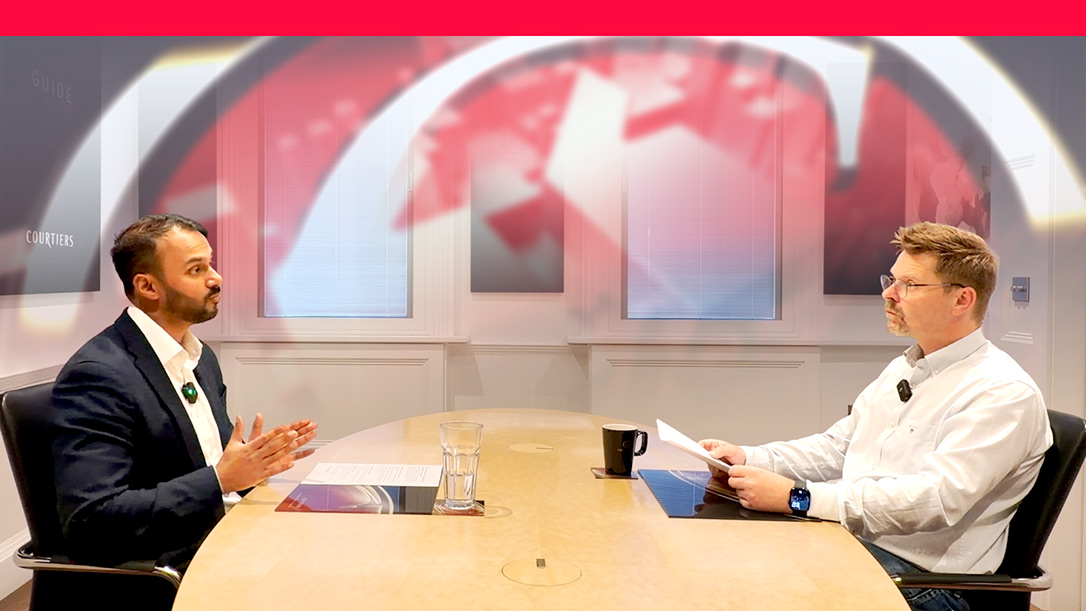
Over the past year, many clients have understandably asked questions about the restrictions under which Courtiers has continued to operate.
While the ongoing nature of these restrictions can give rise to concern, it is important to highlight the progress we’ve made so far, and the work taking place behind the scenes to strengthen the business for the future.
Alongside extensive work, which has been carefully designed to help us navigate through the restrictions and emerge as a robust organisation, Courtiers advisers have continued to support clients every day. Between July 2025 and July 2026, more than 3,300 client meetings took place, providing advice, guidance and ongoing support within our current capability to clients who needed it. Whether that is clients requiring income, retirement planning assistance, or financial advice relating to changing circumstances, Courtiers has remained committed to helping clients navigate important financial decisions.
And importantly, clients can take reassurance from the protections that already exist around their investments with Courtiers. Client money remains segregated from the company’s money under established client asset rules, ensuring that a client’s money is held separately for safeguarding and only used for the purpose and benefit of the client.
What the restrictions mean in practice
While Courtiers continues to provide ongoing advice and support to existing clients, restrictions are focused primarily on new business activity rather than ongoing advice and support. Most notably, we are currently unable to accept new business or implement new investment arrangements that were not already in place before the restrictions. Clients who have been making regular contributions to pensions or ISAs can generally continue those established arrangements, but new contribution arrangements cannot currently be set up.
From time to time, specific permissions may be granted to allow certain activity, but these are considered on a case-by-case basis and cannot be assumed. For clients who are already invested and receiving advice, day-to-day servicing, financial planning discussions, withdrawals, income changes and retirement planning support remain available.
Focused on three key work streams
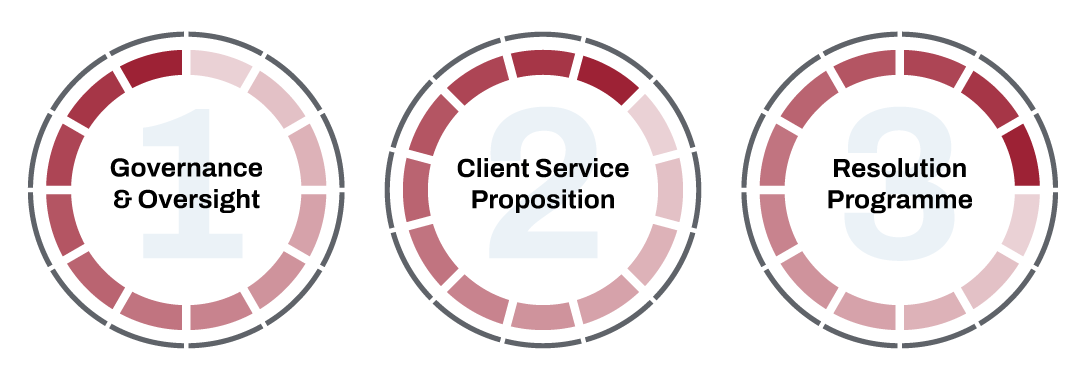
While advice and servicing continue, we’re concentrating significant resources on three major work streams, carefully designed to shape the future direction and success of Courtiers:
Work stream 1. Governance and Oversight
Our Governance and Oversight focuses on strengthening how Courtiers operates through enhanced processes, policies, committees, controls and organisational resilience. The objective is to meet regulatory expectations and build a stronger operational framework that supports clients, advisers and the wider business over the long term.
While many of these improvements may not be visible day to day, they are fundamental to creating a robust and resilient business capable of delivering high standards consistently into the future.
Work stream 2. Client Service Proposition

The ongoing development and implementation of our new Client Service Proposition focuses on creating greater consistency across the client experience, ensuring that clients receive a clear and cohesive service proposition. The objective is to provide greater clarity around service levels, adviser engagement, charging structures and ongoing support.
For clients, this means a simpler, more transparent and more consistent service model designed around clear expectations and improved delivery standards.
The new Client Service proposition is in advanced stages of development and approaching its initial testing phase. We’re very excited to be able to present this to clients as soon as it becomes available.
Work stream 3. Resolution Programme

Our Resolution Programme was designed to identify situations where historic client reviews may not have been completed as expected, or where servicing may not have aligned with fees charged. Where appropriate, clients may receive redress payments. The review process involves a detailed assessment of records and historic servicing activity over several years to ensure that any issues are identified and addressed properly.
What is particularly important is that we are taking responsibility for reviewing these matters thoroughly and contacting affected clients directly when appropriate. A carefully structured and coordinated process is already underway, beginning with communication to specific client groups before extending over time to active clients. If you are a client, please be assured that you do not need to take any action; where relevant, you will be contacted directly.
Progress lasting beyond the restrictions
The work being undertaken is not simply about addressing today’s challenges – it is about ensuring Courtiers remains a strong business, equipped to move confidently through time – time which has recently seen rapid technological advancements presenting new ways to evolve and improve. We are taking this opportunity to harness these opportunities with vigour.
Enhanced governance, clearer service propositions, improved documentation standards and the recording of client meetings are all examples of changes that can help strengthen the client experience and support better outcomes. All our client meetings are now recorded as a matter of course, reflecting our continued focus on transparency, accountability and consistency while developing and delivering the tools Courtiers advisers can utilise to build deeper relationships with clients.
While we cannot provide a definitive date for when restrictions will end, significant effort continues to be invested across our three core work streams. Focus remains on completing the work thoroughly and correctly, with the long-term interests of clients at the centre of all decisions.
As Kapil notes, there is a clear goal overall: when this period is behind us, Courtiers should emerge as a better business than ever before, with stronger foundations, enhanced client protections and a robust service proposition built to last.
Video Transcript
Leo Hallam, Head of Marketing
I’m with Kapil Divecha, Head of Private Clients at Courtiers, and for some time now you may be aware that we’ve been operating under certain restrictions. Now – between July 2025 and July 2026, Kapil and his team have held over 3,300 meetings – and here are some of the most common questions we’ve been asked. Kap, hi.
Kapil Divecha, Head of Private Clients
Hi, Leo.
Leo Hallam
What do the restrictions mean, and can clients still access their money?
Kapil Divecha
So essentially, Leo, the restrictions only relate to new clients and existing clients investing new monies. If a client still needs to do planning around holidays or income strategies or anything like that, we can still give that advice. So those restrictions don’t apply to our ongoing advice for those clients.
Leo Hallam
So if clients don’t need to access their money, is their money safe?
Kapil Divecha
Essentially, the answer to that, Leo, is an absolute yes, because Courtiers’ money is segregated from clients’ own money. It’s to do with the FCA CASS rules effectively. So within the funds, the custodianship of the funds are held by Citibank and the money held in cash is under the custodianship of RBS. Only instructions from the client can be held to take that money out of those clients’ portfolios. So that provides extra protection for clients.
Leo Hallam
So you can still give advice. Clients with existing arrangements can contribute into pensions and ISAs (Individual Savings Accounts), as long as those arrangements were in place prior to the restrictions?
Kapil Divecha
That’s correct, yes.
Leo Hallam
But no new clients – no new money.
Kapil Divecha
No.
Leo Hallam
OK, thank you, Kap.
One of the top questions: how long will these restrictions last?
Kapil Divecha
That’s a difficult one to answer, but what I can say is that we’ve got three work streams that we’re working through.
Leo Hallam
You can’t give us a time?
Kapil Divecha
I can’t give you a time currently.
Leo Hallam
Okay, so these three work streams.
Kapil Divecha
These three work streams – governance and oversight, our new client service proposition, and resolution and refund programme. We’re currently working through those areas, making really good progress, so…
Leo Hallam
Let’s work backwards through those then, shall we? Resolution and refund programme, what exactly is that?
Kapil Divecha
It’s looking at clients that have paid fees for ongoing advice but didn’t have their review. And in the regulator’s eyes, that is the documentation didn’t go to the client. A second part to that is around fees that we’ve charged, namely the discretionary fee. Has that fee been appropriate to the client that has been charged that? If not, a refund applies.
Leo Hallam
How many clients is this resolution and refund program likely to affect?
Kapil Divecha
It doesn’t affect all clients but we have to look at the process of going through. So we’re looking at departed and deceased clients first. Then we’re moving on to active clients. So not every client will be impacted – it’s just the ones that haven’t received the right services or a review.
Leo Hallam
Okay, so for any clients that are affected, how long should they expect to have to wait to find out?
Kapil Divecha
We will be in contact with those clients, Leo. It’s a matter of us going through our own processes to say, we need to send a letter to this client because they’re next on our work stream of items to go through.
Leo Hallam
Thanks, Kap. And just one more question on this. How is the amount, the refund amount, determined?
Kapil Divecha
Our resolution team, we have a resolution team that have worked through all this detail. They would be the best people to talk to regarding that, but essentially it’s looking at reviews and did they happen, so on and so forth.
Leo Hallam
Thank you. So working backwards, new client service proposition, tell us a bit about that.
Kapil Divecha
Yeah, so we worked quite well as a team in Courtiers at building that. We’ve got different offerings for different clients. I won’t go through those offerings because I’ll let our adviser team talk through with those clients around those offerings. But that’s looking at getting all clients paying the same fee for the services that we offer.
Leo Hallam
And delivering a consistent proposition to clients.
Kapil Divecha
Consistency is key, yes.
Leo Hallam
Sure, thank you. And then the first one you mentioned was governance and oversight.
Kapil Divecha
That’s been looking at how we operate as a business, so looking at the controls that we have in place. One of the elements would be the delivery of the new service proposition. Have we involved all the teams at the right time?
Leo Hallam
To define that (proposition)?
Kapil Divecha
To define that. And from a Courtiers perspective, that’s been a very good piece for us. We’ve worked together, Leo, on it.
Leo Hallam
Yes, various new committee structures have been established and that creates the communication across the different teams, as you say, at the right times and getting the right knowledge from the right people.
And how has this impacted our systems and processes? As an organisation, we’re looking back seven years. We’ve grown in seven years. So how are you seeing the governance and oversight side of this exercise?
Kapil Divecha
Well, let’s look at how reviews have been worked on. Previously we would have had the adviser book the meeting, send the paperwork and finish the meeting. Now what happens is we’ve got a very efficient advice support team that contacts our clients. So clients would have seen that it’s not the adviser contacting them. They book the meeting in, the adviser would then go to the meeting. And the difference from an adviser’s perspective is that we’re using AI and transcripts to record calls, which means we’re more efficient at getting things out to clients.
Leo Hallam
And then you can clarify with the clients that what you’ve covered in the meeting is complete and correct.
Kapil Divecha
We use an e-mail summary after that meeting just to confirm some of the details which means we’ve got time to change things if the clients don’t think something’s quite right after that meeting.
Leo Hallam
So if I said to you seven years ago, you and the team have got 3,300 meetings to deliver in 12 months, could you have done that with the equipment that you had?
Kapil Divecha
No, I don’t think so. I think things have moved on so much with technology that we’re able to deliver at a much better pace and a more efficient.
Leo Hallam
I guess with the rate of advancement in tech, this is a great opportunity to be reviewing that governance and oversight structure.
Kapil Divecha
Absolutely.
Leo Hallam
The level of detail that we are – and I can vouch for what you say, Kap, having been involved in this. The governance and oversight is ramping up significantly and we have made some excellent progress on that. So, back to yourselves, the advisers and the clients. What would you say to any clients watching this?
Kapil Divecha
First of all, I’d like to thank the clients for their loyalty and patience through this process because I know it’s been difficult for them to understand why they’ve not been able to do certain things. Just know, as a business we are spending a lot of time and resource on getting out of these restrictions and working on those three work streams that we’ve talked about in order to deliver what we need to.
Leo Hallam
Kap, thank you very much. That covers the questions that we’ve been asked most commonly.
If you have any questions, please speak to your adviser or contact us.