


Now it’s the new UK tax year, many investors and business owners are keen to understand what’s changed – what hasn’t – and what it all might mean for their financial plans.
Altogether now
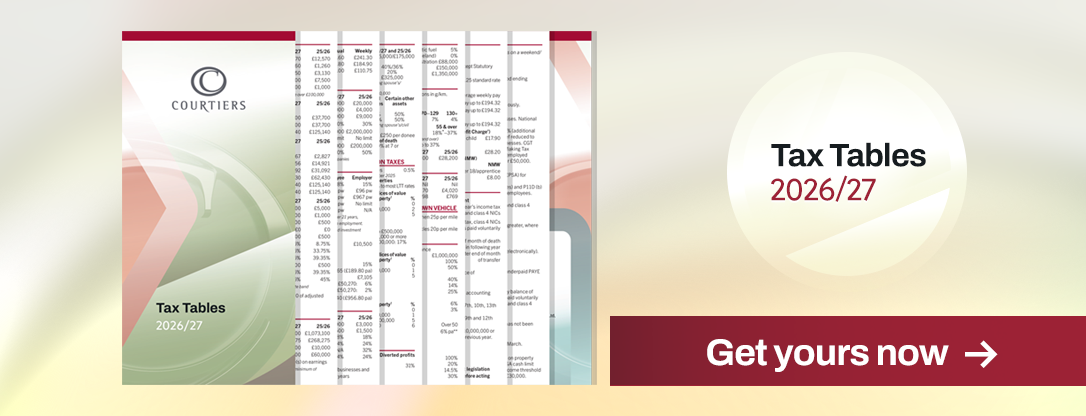
To help you stay aware of changes, put these handy, bite-size Tax Tables somewhere safe. They compare this current tax year to the last tax year, so you can quickly look up what’s changed and in what way – whenever you need to.
Summary of tax changes
- Most personal allowances remain unchanged, as existing thresholds roll into the new tax year
- Tax on dividend income has increased, making it important to review how investments are structured
- More generous reliefs are available for business investment, particularly for companies planning capital expenditure
- Pension rules remain the same, meaning effective pension planning can continue to benefit many individuals
- The government’s digital tax reporting initiative continues its rollout, with more people now coming into scope
Forward planning is increasingly important, particularly for:
- High earners
- Business owners
- Investors drawing dividend income
- Landlords and self-employed individuals
Tax changes in detail
Personal Allowances
For most individuals, headline income tax allowances have remained unchanged:
- The personal allowance stays at £12,570
- Income tax bands and thresholds are unchanged
- The additional rate still applies once income exceeds £125,140
However, with allowances frozen, more people are finding themselves gradually drawn into higher tax bands as incomes rise (a phenomenon often referred to as fiscal drag).
Regular reviews of income sources, pension contributions and tax wrappers remain key to managing long term tax efficiency.
Dividend Tax
One of the most significant changes this year affects investors drawing dividend income:
- Dividend tax rates have increased by 2% at basic and higher rate levels
- The dividend allowance remains at £500
This particularly affects:
- Company directors
- Portfolio investors relying on dividend income
- Family investment companies
Reviewing how investments are structured — including the use of ISAs and pensions — is increasingly important.
National Insurance
- Employer National Insurance remains unchanged at 15%
- The Employment Allowance has risen to £10,500 per business
Rising wage costs and employer NICs mean business owners should remain conscious of overall employment expenses.
Pensions
Pension rules remain generally unchanged for 2026/27:
- Annual allowance remains at £60,000
- Lump sum allowance and Lump sum death benefit allowance are unchanged
- The State Pension increases in line with annual uprating
Pensions continue to offer one of the most effective long term tax planning opportunities, particularly for higher earners and business owners.
Capital Gains Tax: important for business owners
Capital gains rules are largely unchanged, with one important exception:
- Business Asset Disposal Relief (formerly Entrepreneurs’ Relief) increases to an 18% tax rate on qualifying gains up to £1 million
This change is particularly relevant for those:
- Considering a business sale
- Restructuring ownership
- Planning succession
Focusing carefully on timing and structure, with access to advice, could make all the difference to your financial affairs.
ISAs and Tax-Efficient Investing
ISA allowances remain unchanged:
- £20,000 annual ISA allowance
- Junior ISA limit remains £9,000
- Lifetime ISA unchanged
While allowances are stable, reliefs for certain specialist investments have reduced, reinforcing the need for careful selection and suitability.
Business Investment: encouragement through capital allowances
The government has expanded capital allowances for businesses:
- A new 40% first-year allowance is introduced
- The Annual Investment Allowance remains at £1 million
- Enhanced reliefs remain for incorporated businesses
This is a clear signal in favour of continued business investment, particularly for companies planning capital expenditure.
Property and Transaction Taxes
There are no major structural changes to stamp duty or land taxes across the UK this year. Higher surcharges on additional properties remain in place, keeping tax considerations an important part of property-related decision-making.
Making Tax Digital: the ongoing shift
From April 2026, Making Tax Digital for Income Tax Self Assessment applies to selfemployed individuals and landlords with income over £50,000, with further expansion planned.
Digital compliance is becoming unavoidable – early preparation can reduce future admin and stress.
Looking Ahead
While 2026/27 does not bring sweeping change, the effects of frozen allowances, higher dividend taxes and expanding digital requirements highlight the benefits of forward planning, while understanding current rules and regulations.
Courtiers remains focused on helping you protect wealth, plan confidently and adapt to the changing tax landscape. If you would like to discuss how these changes affect you and your wider financial strategy, your adviser will be happy to answer any questions. Alternatively, you can contact us online.