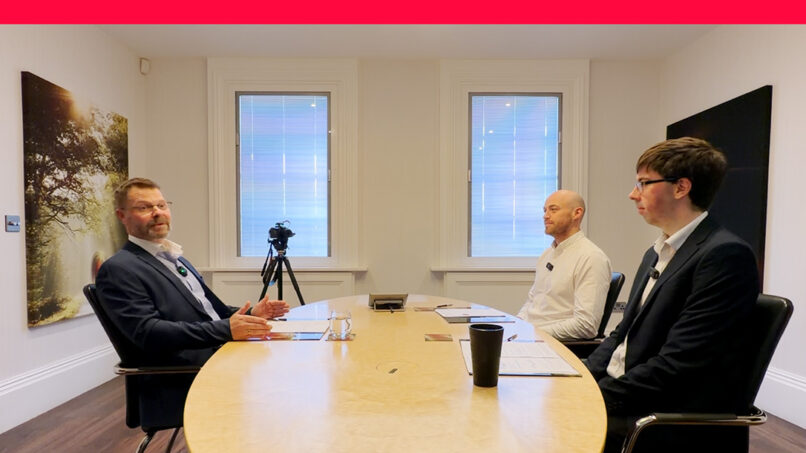
Speedy inquisitiveness leads this latest CIO Talk, with a lot of ground covered. As we drift through change, our message stands firmly: investing successfully in real life requires diversification, discipline and a balanced, long-term perspective.
Key topics in the chat
Political Instability: We’ve seen many changes in government leadership post‑Brexit and we’re seeing it again.
Market Responses: A drop in the pound vs relatively stable gilt markets shows mixed investor concern.
Courtiers Fund Performance: Our Multi-Asset funds remain resilient, delivering consistently positive returns with levels of volatility carefully controlled by the Investment Team.
Disciplined Investing: Our duty is to remain firmly against speculative stocks. Focus is fixed on fundamentals and long-term value.
Expensive vs Cheap: UK and select global markets offer attractive value relative to more expensive US equities.
Emerging Markets Shift: We’re increasing our allocation to emerging markets, particularly China and parts of Asia, while balancing opportunity with volatility.
AI: Greater opportunity lies in companies applying AI effectively, not necessarily those creating it.
Volatility = stress: Diversification is crucial in reducing investor stress by managing volatility carefully in the funds.
Middle East tension: Markets continue to be tested, while resilience remains strong and numbers can sometimes tell us more than the news.
Listen to the podcast below, or read on for the transcript.
Interview Transcript
Leo Hallam (Head of Marketing)
I’m with Chief Investment Officer, Gary Reynolds, to talk through what’s been a fast-paced few weeks in markets and around the world. Gary, we want to be fast-paced here – I’m looking for a minute, a minute, a minute. We’ll start with your favourite subject, politics – and you’ve got a minute.
Gary Reynolds (Chief Investment Officer)
Oh, wow.
Leo
It’s been 10 years since Brexit. How did the UK government mark the decade?
Gary
Well, Brexit kicked off with a prime minister resigning, and 10 years later, it kicked off with another prime minister resigning, so Starmer stood down.
Leo
Talk to us about the cyclical nature of political instability.
Gary
It is cyclical, and you’ve had six prime ministers in 10 years after Brexit, starting with Theresa May, who replaces Cameron, because he resigns the day after Brexit, six in 10 years post-Brexit. Six in 40 years pre-Brexit, starting from Callaghan, Thatcher, Major, Blair, Brown, Cameron. So there’s your answer: the average tenure of a prime minister has shrunk by 75%.
Leo
So no one really knew what they were doing. What do you think Burnham will bring that’s any different?
Gary
I think actually Burnham’s a more credible leader. I think he’s more in touch with people. Starmer really struggled to communicate. I think Burnham will do that. Since Starmer resigned, the pound dropped, so the markets don’t like Burnham from a pound point of view.
Leo
This leads to my next question: market response?
Gary
Markets didn’t respond too much with gilts, but the pound weakened, so that tells you something. Parts of the market were not happy. Parts of the market were less concerned. I think what’s interesting is who’s he going to put in Number 10? We are assuming it’s going to be Burnham, of course. It looks like it is, bearing in mind that Streeting has thrown his weight behind Burnham’s campaign to become PM.
Leo
And sticking to market performance, Courtiers funds. How have they been doing?
Gary
They’ve been doing really good. I don’t want to jinx it, but I think if we get to the end of this quarter (which is at the end of June) with positives, it will be 6 positive quarters for the Multi-Asset Funds. Jake and James will talk about that a bit more when you put them on camera.
Leo
Stocks. SpaceX – clients won’t have heard much from us because we didn’t buy into it. What are your views on that?
Gary
I can’t buy it. We are paid to make investments, not speculate. We’re not speculating. We’re not gamblers with people’s money.
Leo
Have you watched it since it floated?
Gary
Yes. It’s gone up and come back down again. A bit like – a rocket. Like Musk’s rockets. It goes up, comes down, but all stocks do that. You’ve got to get your head around the fact that this is a company that doesn’t make any money and it’s trading, not at multiples of its profits, it’s trading at multiples of its turnover. So it’s like opening a sweet shop, which turns over 10,000 pounds and makes no money at all. And you’re going to buy it for a million. It’s almost as crazy as that. Is SpaceX our tulip moment when we get this market says, this is the craziest it can be? The whole thing with SpaceX and Tesla is utter faith in Musk – in his ability to see the future and capture it.
Leo
Stocks, cheap versus expensive. What does the landscape look like?
Gary
The UK is really quite cheap. US stocks are trading around twice the level of earnings of UK stocks. You’ve got this situation where parts of the market are very, very expensive by historic standards, and parts are very cheap by historic standards. So we lean towards the stuff that’s cheap. What we’re looking for is not to make the money in AI. When you look back at the big changes in history – take electricity, take railroads, this sort of thing – generally, the money gets made by the companies implementing it, not necessarily the companies – it almost gets socialised away. The benefits of railways get dispersed in the communities. The benefit of electricity gets dispersed in the communities, used in all sorts of ways. But the companies that really do well are the companies that grab that invention. A great analogy I’ve heard recently is you get some businesses, when electricity came out, some factories used it to power lights, but others powered their machines. The ones that did really well were the ones that powered their machines. They beat the ones that just powered their lights but kept powering their machines with oil or coal or whatever else they’ve had. It makes a big difference in the way you do it, and what you want to look for is the companies that are going to do really well using AI.
Leo
Volatility. We have various funds to meet different attitudes to risk and appetites for investing – loss and return. Talk about Courtiers’ fund volatility versus other fund volatility.
Gary
If you look at our Growth fund, which has performed extremely well over the last year, roughly in line with the S&P 500 index, we’ve done it at lower volatility. And that’s because you use this way of dispersing risk across a basket of assets.
Leo
Diversification.
Gary
Yes, you’re trying to get your investors to their objectives with the least possible stress. That’s the goal. That’s why volatility brings stress. Try and keep the volatility down.
Leo
Emerging markets. What do they look like?
Gary
They look really quite exciting. They’re very different. If you look at Indian stocks, they’re really expensive compared to Chinese stocks. You find some good bargains in places like Korea. but we’ve been leaning more towards Chinese stocks recently. And we think the way in which Xi Jinping has taken the Chinese economy, which is trying to get the consumer buying more – so they’re moving away from an investment-driven economy, where they’re just putting up lots of buildings and new airports and new cities, to one where consumers drive the agenda. The US and the UK are massive consumer-driven economies. They’re nearly 70%. But in China, the economy is driven by investment, which is at around 40%, 50%. It’s exciting what’s going on in China at the moment.
Leo
So all this considered, are there any shifting trends in your current portfolio diversification?
Gary
Shifting more towards emerging markets. Emerging markets are a bit more volatile than main markets, so we can’t put your shirt on emerging markets – you have to be careful. We’ve been increasing our weight judiciously on that, which I think, has been the right way to go. And we’re looking for the the stocks in those emerging markets have got potential and are cheap.
Leo
Thanks, Gary. You mentioned the Middle East and peace, the Memorandum of Understanding, as it was called. 60-day window…what to expect. What can we expect over the next 60 days? Is there still going to be volatility?
Gary
I think the most surprising thing with the conflict is that the oil price didn’t go higher than it actually did. You go back to the summer of 2008 and oil hits around $140 a barrel. So here we are, 18 years later, the Strait of Hormuz shut, and we’re all getting jumpy because it’s above $110. But it’s not going up to $200 or $250, which I think was quite remarkable. I think price can tell you a lot that you don’t necessarily get in the news. It told you the expectation probably was that the Strait would open up. It probably tells you that a lot of countries were stockpiling a lot more, particularly China, than perhaps the market had anticipated. I think it also reflected the fact that Iran and the US both needed the Gulf opened, notwithstanding that the US is a net exporter of oil these days. Those are incentives all round, and as all traditional economists will tell you, incentives work, so if you’ve got two parties incentivised to get something done, they’ll get it done.
Leo
Do you think it’s fair to say that while-ever markets are ticking, there’s always something to worry about?
Gary
There’s always something to worry about. because the thing that spook you next is probably nothing that’s on your radar at the moment. So there’s the classic Rumsfeld, there are things we know we don’t know, and the things we don’t know, we don’t know. That is the case when you’re working with asset management. You know something is going to come around the corner, because it always does. There was a long conversation with the advisers on our CIO talk yesterday. One of the questions came up, being asked by one of our younger advisers; why is the world such a worrying place at the moment? I said, it’s always been a worrying place, but when you’re young, you think it’s more worrying then. If you track back to the high inflation times of the ’70s, oil price spiking, inflation in this country going above 20%, get to about 25%, 26%, twice the level it was at the peak post the COVID reopening. Then you get to the ’80s. You get to the Falkland conflicts. You get to riots in this country. You get to the market collapse of ’87. You get to the first Gulf War in the early ’90s. You get to the Russian debt crisis. You get to the second Gulf War in the early ’00s. You get to the global financial crisis. You get to the American debt crisis. You get to the Euro crisis. You get to COVID. You get to Ukraine being invaded. It’s always something there, always something there to spook people. If you track back through history, that is life, so you just have to manage it. And you manage it through diversification.
Leo
Ending on a rather philosophical note, it’s mankind’s drive for survival.
Gary
Yeah. Here’s an interesting thought for you, Leo. Mankind’s drive for survival makes us always want to do things and be better. We have an assumption that if we get to AGI (Artificial General Intelligence) and we get to the singularity it’s called, that it will then design every machine that mankind ever needs from there on in.
Leo
Artificial general intelligence.
Gary
Artificial general intelligence, which effectively means it sits alone and thinks. The question is, what will motivate it? Why should it design any more machines? What if it’s just lazy and won’t do anything? There’s a lot of assumptions being made, and we sort of anthropomorphise this AI because it talks to us. If you have a conversation with it, it’s like talking to a good friend. It’s very respectful. It chats to you, and we kind of assume that this “AGI being” is going to have the same motivation that we have. Who’s to say?
Leo
Well, at the end of the day, its brain is everything that we’ve learned over years, decades and the likes, consolidated into a really quick search engine.
Gary
Yes. If there’s one thing I would say, is that I do think some of the move to AI and thinking it’s going to be more intelligent than us, is not doing justice to how quite remarkable human beings are. And I think that’s a key issue, because to try and find a machine that will do what we do – all the stuff we do subconsciously…our social interaction, the fact we can get up, dress in the morning, feed ourselves, drive, do things, fly – there’s a whole host of things. We don’t even think about it, but it’s tough to try and get machines to have that level of awareness.
Leo
Food for thought. Gary, thanks for your insight into many things – what’s going on with the funds. I look forward to talking to you and the team more about how things develop there.
If you do have any questions for your adviser or if you’d like us to put anything to the Investment Team, please do contact your adviser or contact us through the website.
Thank you.