
For the sixth quarter in a row, the Courtiers Multi-Asset range delivered positive returns, matching a record last set between mid-June 2012 and the end of 2013.
The Courtiers Total Return Cautious Risk Fund, Courtiers Total Return Balanced Risk Fund, and Courtiers Total Return Growth Fund returned +7.52%, +9.60%, and +11.82%, respectively. The equity funds – comprising the Global (ex-UK) Equity Income Fund, the UK Equity Income Fund and the Ethical Value Equity Fund – returned +5.74%, +9.96% and +10.08%, respectively, in the quarter. The Investment Grade Bond Fund returned +1.44%, completing a full set of positive returns.
Whilst a clear resolution to the situation in the Strait of Hormuz remains elusive, some vessels have resumed transiting the narrow maritime passage, easing pressure on markets. Oil prices, as measured by Brent Crude, fell by -38%, after rising +94% during the previous quarter. Prices have now returned to levels seen before the conflict between the US and Iran began.
Increased OPEC production and the use of alternative export routes have helped reduce oil prices. However, countries such as Qatar, a major supplier of liquefied natural gas (LNG), remain unable to operate normally. As a result, natural gas prices and, consequently, UK energy prices have remained elevated.
With a resolution to the Iranian conflict on the horizon, inflation expectations have moderated, and market expectations for Bank of England base rate hikes during the remainder of 2026 have fallen from two to one. This has provided support for markets and helped drive interest rates lower. However, the expectation of multiple rate cuts in 2026, which was the consensus view at the start of the year, now feels like a distant memory.
The rate at which the UK government can borrow for 10 years (the 10-year Gilt yield) declined from 4.91% at the beginning of the quarter to 4.76% by the end. This meant UK government bonds, measured by the FTSE Gilts All Stocks Index, rose +1.99% with long-dated gilts (over 15 years to maturity) rose +2.29%.
With interest rates declining, smaller companies tend to perform better, as they often carry more debt than their larger counterparts. The FTSE 100 had a positive quarter, returning +4.04%, but smaller companies, as measured by the FTSE 250 and the FTSE Small Cap Index, returned +8.38% and +9.59%, respectively.
The story was similar in the US. Large companies, as measured by the S&P 500, rose +15.20%, whereas the S&P 600, which represents 600 smaller companies, rose +19.69%.
The Courtiers funds have built significant exposure to smaller companies over the last few years, as valuations have been attractive. The Multi-Asset Funds hold a position in the S&P 600, and the equity funds have been increasing their exposure to smaller companies as the investment process allocates capital to attractively valued businesses. This strong quarter for smaller companies provided a tailwind for fund performance. The Global Fund was held back slightly by its exposure to energy markets as oil prices declined.
Despite a strong May for the US technology giants, the Magnificent Seven (the seven largest technology companies in the US) fell -8.81% in June, pushing them into negative territory for the year as investors continued to question their substantial capital expenditure programmes for data centres.
These substantial capital expenditure programmes are supporting Emerging Markets, particularly markets such as Korea, which is heavily influenced by memory-chip manufacturers, Samsung and SK Hynix. Korea’s main equity index, the KOSPI, rose +67.95% during the quarter, while Emerging Markets returned +24.22%. The Courtiers Multi-Asset Funds hold positions in Samsung and Lenovo, which rose 99.76% and 151.00%, respectively.
Within Emerging Markets, China had a more challenging quarter, with the MSCI China Index falling -6.87% during the quarter. Despite China’s meteoric GDP growth, its stock market has been largely flat over the past 19 years, having peaked in the year before the Beijing Olympics. We have used this weakness to build a position in the Hong Kong Stock Exchange, where listed companies appear attractively valued and China continues to develop as an economy.
Europe also enjoyed a positive quarter, with the Eurostoxx 50, representing 50 of Europe’s largest companies, rising +15.72%.
Cracks have continued to emerge in precious metal markets after years of strong gains, with gold and silver falling -13.53% and -20.45%, respectively, during the quarter.
Interview Transcript
Leo Hallam (Head of Marketing)
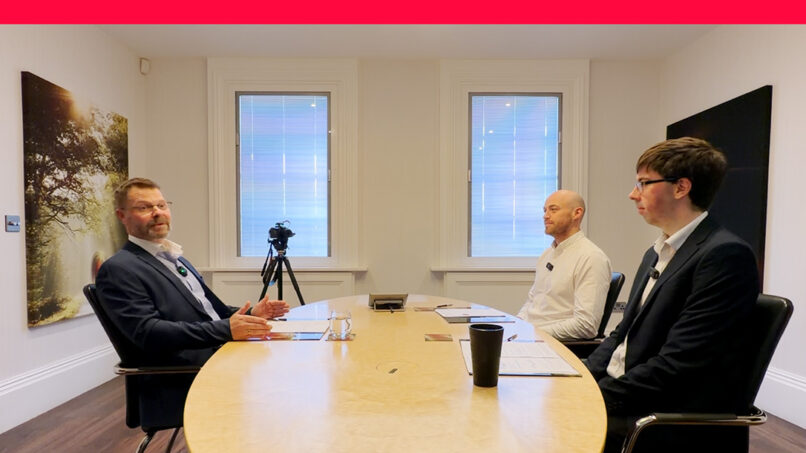
I’m here with Asset Management Director, Jake Reynolds, and Head of Asset Management, James Timpson, to talk about what’s been happening in the Courtiers Funds and in markets around the globe between April and June. James, if we can start with you. We’re looking at some big numbers and quite a big streak. What can you tell us about the Courtiers Funds?
James Timpson (Head of Asset Management)
Yeah, so I’ve got a happy face on for this one because it’s been another really good quarter. The Cautious Fund is up 7.5%. Balanced is fund up 9.6% and the Growth fund is up 11.8% this quarter. And this actually marks the sixth quarter in a row where all three of the funds have had positive returns.
Leo Hallam
When was the last time that happened?
James Timpson
It happened last back in 2012, 2013. It’s the first time in about 12 years that we’ve seen six consecutive quarters of positive returns. Now obviously you do get a bit of timing things going in your favour. Last year you had the tariff crash. That happened right at the start of the quarter. So there’s time for the markets to recover by the end of the quarter. And even this year, when we saw the Middle East conflict crash, that happened at the end of what had otherwise been a really strong quarter. So that was still positive. But having said all that, it has overall been a really strong period, because in those six quarters, the Growth fund has returned nearly 34%, Balanced 26%, and Cautious 19%. So it’s been a really, really good time to be invested in these funds.
Leo Hallam
So we’re talking about six quarters of positive returns in a row. To put that into context, that’s 1 1/2 years of positive returns. Jake, what’s been driving these positive returns over the last quarter?
Jake Reynolds (Asset Management Director)
So it’s not just absolute performance that’s really good, it’s relative performance as well. We don’t look at the competition, you know, we’re on camera a month ago talking about the 10-year award on the growth fund, and that’s like ranking us against other fund managers. We need to focus on our clients’ objectives and building a portfolio that’s right for their goals, so that’s what we’re focused on. We always say that being prudent pays and that’s what we do when we build up these portfolios that are diversified and try to steer clear of big risks. The reason relative performance is really good is that a lot of people have just been going with the flows of the big stories that are around at the moment, which is “buy the Mag7, buy US tech”. And that’s been really struggling. Where we have been invested more is in smaller companies – value companies. We love to find companies with good fundamentals. And they’ve done really well this year. Obviously, they’re more domestically focused and more interest rate sensitive. When the conflict between Iran and US kicked off, there was a little bit of give back. This stuff did really well in the first couple of months of this year, but we’ve got that back now, particularly in June.
Taking the UK as an example, we’re still expecting one rate hike this year because inflation expectations have risen, because oil rose. It’s now come back down, but there are still high gas prices. When you have lower interest rate expectations, domestically focused stuff does do better. The Emerging Marking portfolio has been amazing and these Mag 7 have been struggling. People are calling them hydroscalers because there’s other companies in there, they have these huge capital expenditure budgets, spending billions and billions of dollars on data centres and people are a bit concerned about that. That’s why they’ve not performed as well, even despite all the excitement of AI. But this has spilled over. People are noticing all the “picks and shovel” plays. They’re called picks and shovel plays because in the gold rush in California, it wasn’t the miners that performed well – it was the people manufacturing the picks and the shovels, to be bought by people that were part of the gold rush. We’ve been really well exposed to these because they are companies that are just doing normal stuff that people need. Samsung (I think we wrote about it last quarter, but I don’t think it made the video) had three quarters where it was up nearly 40%. In the last quarter, Q2 2026, it’s done 99%. because it makes memory and Lenovo, another part of our Emerging Market exposure, is making servers. They put all the bits together from Nvidia and Intel and Samsung, and it all goes into a big service stack. Lenovo make that. And so they’re up 150% this quarter. These things have really driven the portfolio forward. Then lastly – this is a bit of a sugar rush because we’re kind of sad to see it go because it was paying a huge dividend – but we mentioned that renewables were really good last quarter because obviously oil prices had come up, but the wind was blowing and the sun was shining. So renewables were producing a lot. We had exposure with Bluefield’s Solar Income Fund and that’s actually been bought out by Drax, the power manufacturer. That’s up about 42% this year. Sad to see it go, because they’ve got to find something else. But, it’s good to get 42% return.
Leo Hallam
It’s always nice to talk about what’s doing well, especially when you guys are returning positive over six whole quarters. There’s a lot doing well. What about what’s not doing so well?
Jake Reynolds
Yeah, I guess, you know, we talked about oil being up 94% last quarter, it’s now down 38%. So that’s back down to the level that actually we saw at the end of February before the conflict started, which is really interesting because the Strait of Hormuz that kicked all this off blocked, isn’t fully operational yet. There are some ships coming through. There was a blip where we thought it was opening up and then it went back down again. We talked about human ingenuity and people pivot really quickly, so Saudi are producing more and that’s brought the oil price back down, but it’s not good news across the board because states like Qatar, the big gas exporters, they’re really dependent on Australia for moves – they have no workaround, so gas prices are still quite high and therefore you get energy prices. Countries like Germany will have high energy prices. So what’s done badly? Oil means that our Energy stocks, particularly a couple in the Global Fund, haven’t done as well. So they’ve held back, I think, Global Fund is still up nearly 6%, but not as much as the other funds that were benefiting from that smaller cap exposure and interest rates coming down exposure. Those interest rate effects have not led to the consumer’s pocket yet because like energy product prices are still quite elevated. So consumer discretionary stocks – companies that make discretionary purchases – the stuff that would fall into that is like house builders or car manufacturers. They’re big ticket items that you need to feel really confident about the economy before you take on that dare, and you go and buy and purchase that. So actually like we have Stellantis, which is Peugeot, Citroen, Alfa Romeo and we have Mercedes and then some house builders. We’ve got big pocket of UK house builders as well. We think, there’s a massive housing deficit Gary talked about, I think last month on the video. They’re also incredibly good value and they’ve got amazing balance sheets. It’s not the same as when, going it to the 2007 – 2008, where these companies were a lot more leveraged. They’re completely deleveraged, healthy balance sheets, and we need more housing.
Leo Hallam
So we’re seeing this steady rise since the 90’s of China as a percentage of global tokal GDP, and that has increased massively. You can’t ignore it anymore.
James, talk to us about China.
James Timpson
Yes, so China historically is a region where we haven’t been heavily invested at all, partly because of a lot of investor restrictions and how state-controlled it is. And Lenovo, which we mentioned, was our only direct exposure at all until recently. And even then, we only invested in Lenovo because it came up on our shortlist. And it’s listed on the Hong Kong Stock Exchange, so it’s very easy to trade. But in the last quarter, we’ve sort of paid a bit more attention to China. Its share of global GDP has absolutely ballooned in the last couple of decades. It was 1 or 2% in the early 90s. Now it’s nearly 20%. So now, not being invested in China is a much more of an active position and having some exposure to it. So what we’ve done is we’ve dipped our toe in, we’ve invested in the Hang Seng Index, The advantage of that is it trades very liquid futures and we already trade a lot of futures, so there’s very little-to-no setup required. So we’ve dipped our time into the Chinese market with this Hang Seng index. It currently makes up 2% of the growth fund, 1.5% of Balanced and 1% of Cautious. And we’re also looking to build on it by looking at direct stocks, which a bit like Lenovo, won’t be directly traded in the Chinese stock market because of all the values to entry there. It’ll be listed in Hong Kong, which is much easier to access.
Leo Hallam
So I’d like to ask you both – how important is it that you stick to your investment principles as opposed to trying to adapt to all market shifts?
Jake Reynolds
So much of what we do is really simple, it’s just not easy to do. And that is… Yeah, and I think people are going to cringe at this, but it’s having the best clients in the world because I know, but it is because we are allowed. 2023 was not good for us, but everyone struck with us because they know and you have been rewarded so richly since then because in that period you’ve got interest rates going up, equity markets not doing as well, these Mag 7 stops that there’s a lot of retail investors going into – people are saying, I’m making this, what’s your Courtiers fund doing? But those periods will come, so you have to stick to your process because the process is based on hundreds of years of evidence on how markets behave and how humans behave and doesn’t change. It’ll still be a human at the end of the end of making the decision. Ultimately, it’s avoiding the get rich quick schemes and churning out good returns year on year and doing it with discipline because the get rich quick schemes make you get poor quick eventually, and so you just got to build a diverse portfolio, have the margin of safety with a valuation and just keep churning it out – and grinding it out, every day really.
James Timpson
The funds are nearly 20 years old now and the core risk analysis that goes on behind the scenes, that hasn’t changed at all. The basic calculations that we use in our, what we call it, mean variance analysis…that hasn’t changed. We still use that approach. We still look at the fund betas, as we call them, every month. They’re a risk rating of the funds. They measure the risk of the fund relative to the market. And all the maths that goes behind that hasn’t changed because it works. And here we are nearly about to celebrate the 20th anniversary of the funds and they’ve all got really good track records.
Leo Hallam
Well, that’s a great note to end on. Both of you, thank you very much – James for your time, Jake for your time. If you do have any questions, please, as ever, contact your adviser or contact us through the website.
Thank you.