Britain is not heading towards bankruptcy. We are a wealthy nation whose long-term prosperity depends on restoring productivity growth and unlocking the strength of our private sector balance sheet.
A written Executive Summary follows. Download the full Research Note for an insightful exploration into the state of Britain’s economy and watch the video above (or connect to the podcast) for Gary’s comments.
Public debate about Britain’s finances is dominated by UK government net debt, which rose from approximately £365 billion in 1997 to almost £3 trillion by the end of 2025, prompting frequent claims that the country is heading towards financial ruin.
But government borrowing viewed in isolation provides only a partial picture of national financial health. A proper assessment should consider the balance sheets of households, corporations and the wider economy as well as the public sector.
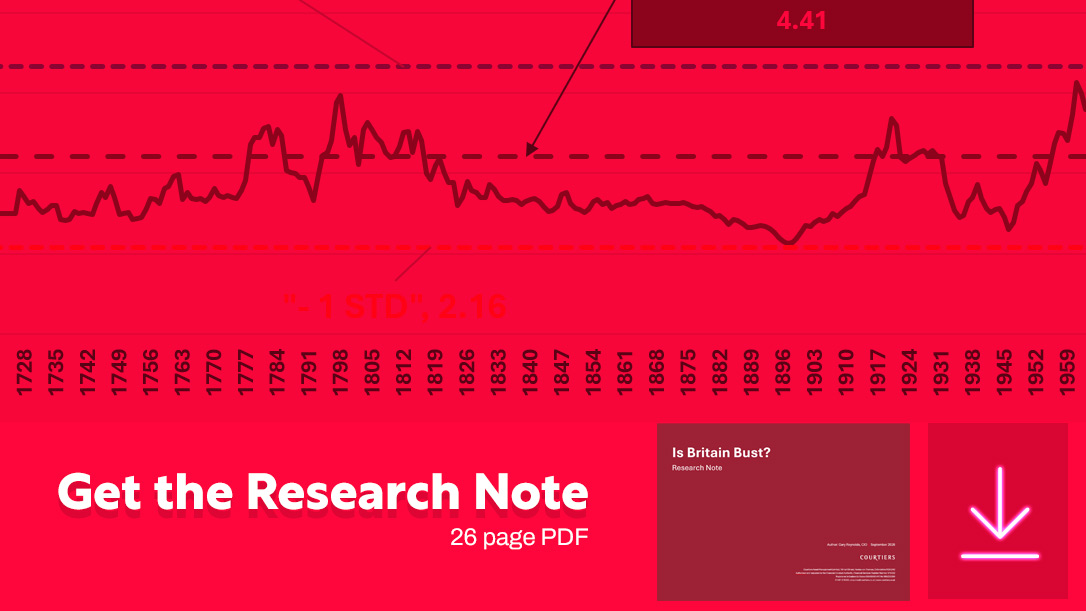
This research concludes that Britain is not bust. Despite government debt increasing significantly, debt-to-GDP is close to its long-term historical average and remains well below previous peaks experienced during major periods such as the aftermath of the Napoleonic and the Second World wars. More importantly, the UK’s private sector remains exceptionally healthy. Household net assets exceed £10 trillion, while corporate balance sheets have strengthened materially over recent years through falling leverage and reduced pension liabilities. Together, these private sector resources substantially outweigh public sector indebtedness.
The country’s principal economic challenge is not excessive debt but persistently weak productivity growth. Since the Global Financial Crisis, UK productivity growth has slowed dramatically compared with historical trends. Had pre-2008 productivity gains continued, the economy would today be much bigger, government debt relative to GDP materially lower, and tax revenues significantly higher. Weak productivity has imposed a far greater cost on national prosperity than headline borrowing figures suggest.
Britain faces a growth and productivity problem, not a solvency problem. Policies that encourage private sector investment, improve productivity and support long-term economic expansion would do more to strengthen the nation’s financial position than focusing on reducing government debt.